Feed Better. Feel Better.®

No Shame. No Blame.
Just answers for your latching and feeding questions.

Feed Better. Feel Better.®

No Shame. No Blame.
Just help for your feeding problems.  

pumping & flange fitting

Does your pump flange pinch? Here's why and how to help.


One of the biggest misconceptions I hear when people come to me for pumping help is, “My pump hurts—it feels like it's pinching, so I think it must be too small.” And that sounds totally logical. But it’s actually the opposite.

It feels backwards, I know—but stick with me.

This blog breaks down why pinching often means your flange is too big, what’s really going on under the surface, and what to try instead.

Here's What's Inside This Blog
Start reading or tap to jump to the section you need.


Why Pinching Happens

The pump is designed to pull milk out from the nipple—not the areola, not your breast tissue, just the nipple. That center tunnel on the flange? That’s where only your nipple should go.

But when your flange is even just a millimeter or two too big, a little bit of your areola gets pulled in too.

And what happens when just a small piece of areola gets sucked into the tunnel? It gets pinched.

That sharp, pinchy feeling? That’s your areola being pulled where it shouldn’t be.

Here’s what a flange that’s just a little too big can look like while pumping. At first glance, it may not look obviously wrong.

But the problem becomes much easier to see when we zoom in on what’s happening right at the base of the nipple.

In this first image, notice the small amount of space between the nipple and the flange tunnel, particularly where the nipple and areola meet.
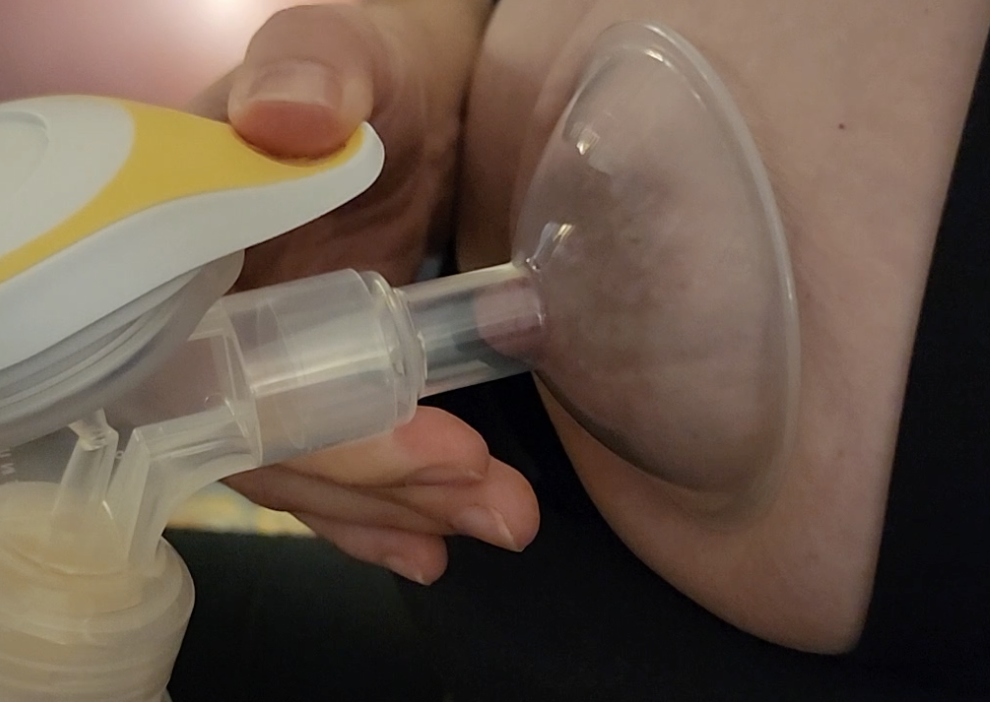
Breast pump flange that is slightly too large with space around the nipple at the base

Now let’s zoom in. As she starts to pump, a small amount of areola gets pulled into that extra space.
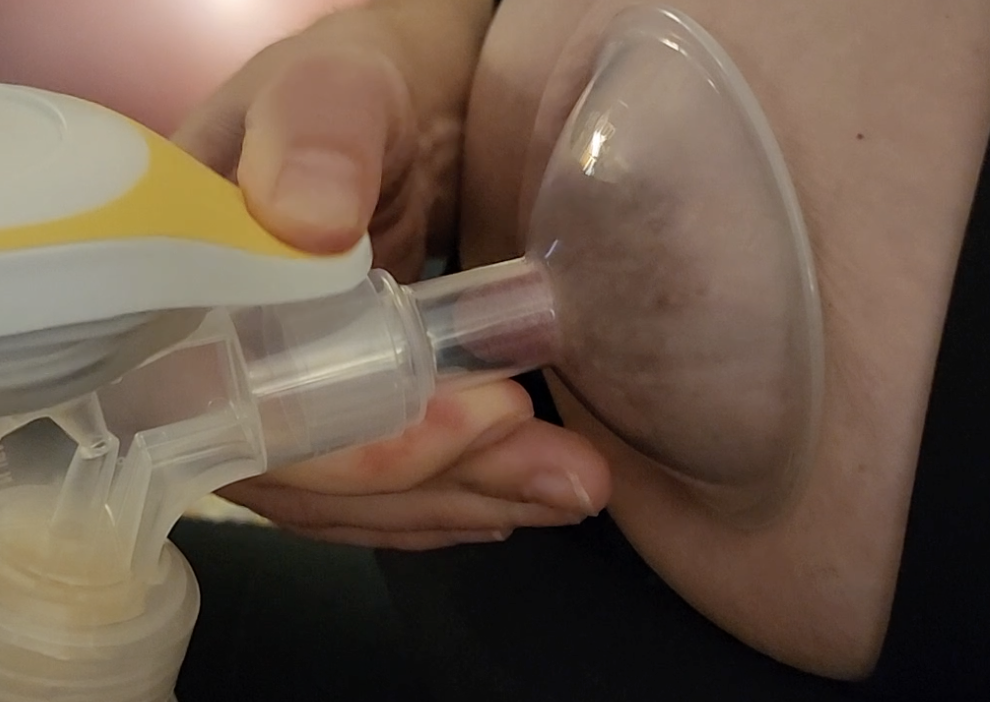
Areola beginning to pull into a breast pump flange that is slightly too large

As the tissue moves back and forth, that small fold of areola gets trapped.

This is the pinch. Notice the fold of areola caught right at the base of the flange tunnel.
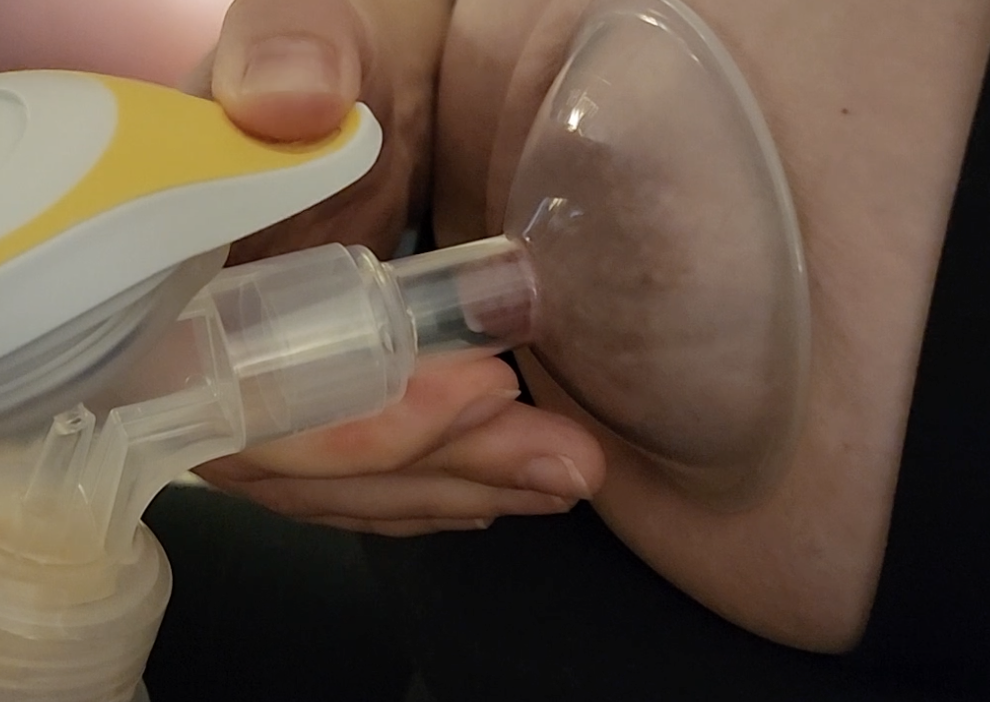
Areola tissue pinched at the base of a breast pump flange tunnel

And if she keeps pumping, either the pinch stays or more of her areola gets pulled inside. Over time, that can put stress on the tissue and potentially cause damage.
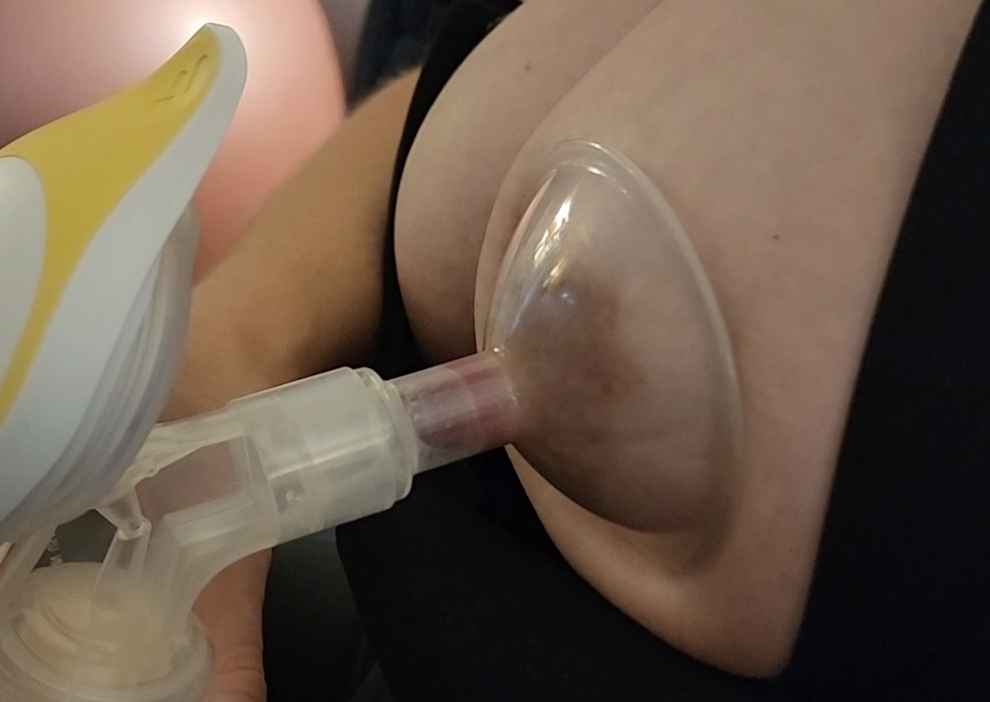
More areola tissue being pulled into an oversized breast pump flange during pumping

It can be confusing to tell the difference between your nipple stretching into the flange—which is supposed to happen—and your areola being pulled inside because the flange is too big. If you’re not sure what you should actually be seeing while you pump, I break that down with pictures in What Should Your Nipple Look Like in a Pump Flange?


Big Doesn’t Always Hurt

A flange that’s much too big usually doesn’t hurt initially, because it doesn't pinch your tissue, and you may think that makes it the right fit.

However, a pump that is too big isn't effective, because it isn't able to stretch your nipple. And you might feel like you have to crank up the suction to get any milk out—because you are really pumping your areola instead—and this can cause long-term tissue damage.

The stinging starts when the flange is almost the right size—close, but still a little too big—and it’s pinching just enough tissue to be painful.

Helpful Tip:  If your flange is close—but not quite right—it often feels pinchiest right before you land on the perfect fit. Try going down a size by a millimeter or two. That’s usually where the magic happens.


Think About It Like This…

If I pinch a big chunk of my arm, it’s uncomfortable but not terrible. But if I pinch a teeny little fold of skin? That sharp bite—that’s what your areola feels like when it gets pulled into a flange tunnel that’s too wide.

The same force is now being applied to a much, much smaller area.

And that hurts.

It’s just really hard to tell what exactly is hurting when your nipple is already being pulled into a vacuum.


So What Should You Do?

If you’ve been sizing up because of pain, try going down instead.

Grab a fit kit with a few options and test them out over a couple of days. You want the flange to hug just your nipple—not pull in anything else.

Don't Forget Lubrication

One more key thing you can do to make sure pumping doesn’t hurt is to lubricate the inside of the pump flange so that your nipple can slide through easily and not get chafed as it touches the sides.

And here’s the thing: if you only pump once in a while, having a perfectly perfect fit may not matter that much. But if you’re pumping regularly—or exclusively—then it absolutely does.

You wouldn’t walk around town in shoes two sizes too big. Your flanges should fit, too.

Once you land on your right fit, things get easier: more milk, less discomfort, less stress.

It’s not about being tough—it’s about using tools that actually work for your body.

Want More Support?

If this blog was helpful, here are a few related resources you might like.

➜ Breast Pump Flange Sizing Guide | How to Measure + Find Your Ideal Fit

➜ Elastic Nipples and Pump Fit | How to Find a Flange That Works

🔒 Go Deeper: How to Make Pumping Work for You

🔒 Expanded Access includes step-by-step videos and resources that go beyond the blog to help you understand and work through common feeding challenges.

Learn more about Expanded Access →


Frequently Asked Pump Flange Questions

A small amount of movement at the base of your nipple can be normal, which is why this can be so confusing. But if you can clearly see your areola being pulled into the flange tunnel, especially if it folds, pinches, swells, or feels uncomfortable, your flange may be too big.

The goal is for the flange to give your nipple enough room to stretch and move without pulling a significant amount of the surrounding areola into the tunnel with it.

The tissue that makes up your areola is different from the tissue that makes up your nipple, and it is more prone to irritation and damage when it is repeatedly pulled into the pump. That is one reason a flange can feel fine at first but become increasingly uncomfortable the longer or more often you pump.


You should feel suction and stretching, but pumping should not feel sharp, pinchy, burning, or like your tissue is being caught inside the flange.

Your nipple will move back and forth in the tunnel, so pumping does not necessarily feel like nothing. But there is a big difference between feeling your nipple stretch with the vacuum and feeling tissue being pinched or rubbed with every cycle.

If pumping hurts, don't assume you just need to tolerate more suction. Flange fit, lubrication, suction level, and how your tissue responds to pumping can all affect how it feels.


If your flange is too big, more of your areola and breast tissue can be pulled into the tunnel along with your nipple. That can make pumping less comfortable and may make it harder for the pump to work efficiently.

If the flange is only a little too big, you may feel a sharp pinch as a small fold of areola gets pulled into the extra space. If it is much too big, it may not pinch at all at first—but you may notice a lot of tissue moving into the tunnel or feel like you need more suction to remove milk.

A flange does not have to look dramatically oversized to cause a problem. Sometimes a difference of only a millimeter or two is enough to change how pumping feels.

About the Expert
Avery Young, IBCLC, is an International Board Certified Lactation Consultant who has spent more than a decade helping parents and professionals understand their baby’s reflexes, build confidence, and make latching and feeding feel better.
Read more about Avery →

#block-1750961153737 { margin-top: 0px; margin-right: 0px; margin-bottom: 0px; margin-left: 0px; } #block-1750961153737 .block { border: 4px black; border-radius: 4px; padding: 0px; padding: 0px; padding-top: 0px; padding-right: 15px; padding-bottom: 0px; padding-left: 20px; } @media (min-width: 768px) { #block-1750961153737 { margin-top: 0px; margin-right: 0px; margin-bottom: 0px; margin-left: 0px; } #block-1750961153737 .block { padding: 0px; padding-top: 0px; padding-right: 30px; padding-bottom: 0px; padding-left: 30px; } } @media (max-width: 767px) { #block-1750961153737 { text-align: left; } } #block-1577982541036_0 .btn { margin-top: 1rem; } #block-1750859243707 { margin-top: 0px; margin-right: 0px; margin-bottom: 0px; margin-left: 0px; } #block-1750859243707 .block { border: 4px black; border-radius: 4px; background-color: rgba(0, 0, 0, 0); padding: 0px; padding: 0px; padding: 0px; padding-top: 0px; padding-right: 0px; padding-bottom: 0px; padding-left: 0px; } @media (min-width: 768px) { #block-1750859243707 { margin-top: 0px; margin-right: 0px; margin-bottom: 0px; margin-left: 0px; } #block-1750859243707 .block { padding: 0px; padding: 0px; padding-top: 10px; padding-right: 0px; padding-bottom: 0px; padding-left: 0px; } } @media (max-width: 767px) { #block-1750859243707 { text-align: center; } } #block-1577982541036_0 .btn { margin-top: 1rem; } #block-1786572835455 { margin-top: 0px; margin-right: 0px; margin-bottom: 0px; margin-left: 0px; } #block-1786572835455 .block { border: 4px black; border-radius: 4px; padding: 0px; padding: 0px; padding-top: 0px; padding-right: 0px; padding-bottom: 0px; padding-left: 0px; } @media (min-width: 768px) { #block-1786572835455 { margin-top: 0px; margin-right: 0px; margin-bottom: 0px; margin-left: 0px; } #block-1786572835455 .block { padding: 0px; padding-top: 0px; padding-right: 0px; padding-bottom: 0px; padding-left: 0px; } } @media (max-width: 767px) { #block-1786572835455 { text-align: left; } } #block-1577982541036_0 .btn { margin-top: 1rem; } #block-1770409298109 { margin-top: 0px; margin-right: 0px; margin-bottom: 0px; margin-left: 0px; } #block-1770409298109 .block { border: 4px black; border-radius: 4px; padding: 0px; padding: 0px; padding-top: 0px; padding-right: 0px; padding-bottom: 0px; padding-left: 0px; } @media (min-width: 768px) { #block-1770409298109 { margin-top: 0px; margin-right: 0px; margin-bottom: 0px; margin-left: 0px; } #block-1770409298109 .block { padding: 0px; padding-top: 0px; padding-right: 0px; padding-bottom: 0px; padding-left: 0px; } } @media (max-width: 767px) { #block-1770409298109 { text-align: left; } } #block-1786572892490 { margin-top: 0px; margin-right: 0px; margin-bottom: 0px; margin-left: 0px; } #block-1786572892490 .block { border: 4px black; border-radius: 4px; padding: 0px; padding: 0px; padding-top: 0px; padding-right: 0px; padding-bottom: 0px; padding-left: 0px; } @media (min-width: 768px) { #block-1786572892490 { margin-top: 0px; margin-right: 0px; margin-bottom: 0px; margin-left: 0px; } #block-1786572892490 .block { padding: 0px; padding-top: 0px; padding-right: 0px; padding-bottom: 0px; padding-left: 0px; } } @media (max-width: 767px) { #block-1786572892490 { text-align: left; } } #block-1750860875087 { margin-top: 0px; margin-right: 0px; margin-bottom: 0px; margin-left: 0px; } #block-1750860875087 .block { border: 4px black; border-radius: 4px; padding: 0px; padding: 0px; padding-top: 0px; padding-right: 0px; padding-bottom: 0px; padding-left: 0px; } @media (min-width: 768px) { #block-1750860875087 { margin-top: 0px; margin-right: 0px; margin-bottom: 15px; margin-left: 0px; } #block-1750860875087 .block { padding: 0px; padding-top: 0px; padding-right: 0px; padding-bottom: 0px; padding-left: 0px; } } @media (max-width: 767px) { #block-1750860875087 { text-align: center; } } #block-1577982541036_0 .btn { margin-top: 1rem; } #block-1751580488950 { margin-top: -75px; margin-right: 0px; margin-bottom: 0px; margin-left: 0px; } #block-1751580488950 .block { border: 4px black; border-radius: 4px; padding: 0px; padding: 0px; padding-top: 0px; padding-right: 0px; padding-bottom: 0px; padding-left: 0px; } @media (min-width: 768px) { #block-1751580488950 { margin-top: -100px; margin-right: 0px; margin-bottom: 0px; margin-left: 0px; } #block-1751580488950 .block { padding: 0px; padding-top: 0px; padding-right: 0px; padding-bottom: 0px; padding-left: 0px; } } @media (max-width: 767px) { #block-1751580488950 { text-align: left; } } #block-1577982541036_0 .btn { margin-top: 1rem; } #block-1769974007603 { margin-top: 0px; margin-right: 0px; margin-bottom: 0px; margin-left: 0px; } #block-1769974007603 .block { border: 1px solid #ECF0F1; border-radius: 10px; padding: 0px; padding: 0px; padding-top: 15px; padding-right: 15px; padding-bottom: 15px; padding-left: 15px; } @media (min-width: 768px) { #block-1769974007603 { margin-top: 0px; margin-right: 0px; margin-bottom: 0px; margin-left: 0px; } #block-1769974007603 .block { padding: 0px; padding-top: 15px; padding-right: 15px; padding-bottom: 15px; padding-left: 15px; } } @media (max-width: 767px) { #block-1769974007603 { text-align: center; } } #block-1769974007603 .feature__image, [data-slick-id="1769974007603"] .feature__image { width: 100px; border-radius: 100px; } .authorfeature { display: flex; align-items: flex-start; position: relative; } .authorfeature__image-container { flex-shrink: 0; margin-right: 20px; } .authorfeature__image { max-width: 150px; height: auto; } .authorfeature__content { flex-grow: 1; } @media (max-width: 767px) { #block-1769974007603 .authorfeature { flex-direction: column; align-items: center; } #block-1769974007603 .authorfeature__image-container { margin-right: 0; } } .awesomecontainer { background: ; h1, h2, h3, h4, h5, h6, p, ul, li, .block-type--table table {color: ;} padding-top: 0px; padding-right: 0px; padding-bottom: 20px; padding-left: 0px; } .awesomecontainer .row { -webkit-box-align: flex-start; -ms-flex-align: flex-start; align-items: flex-start; } .awesomecontainer .row .block-type--accordion { align-self: flex-start; }

You don’t have to figure this out alone.

If feeding feels confusing, inconsistent, or harder than it should, you don’t have to navigate next steps on your own.

Expanded Access offers deeper answers, real examples with real babies, and ongoing support to help you make sense of latching challenges — with answers available when you need them.

Explore Expanded Access